For decades, the advice for anyone with osteoporosis or osteopenia (or women in general) was simple: be careful. Avoid heavy weights. Don’t jump. Don’t bend and lift. Protect the bones by doing less with them.
It sounded sensible.
It was also completely wrong.
The study that changed the advice on osteoporosis
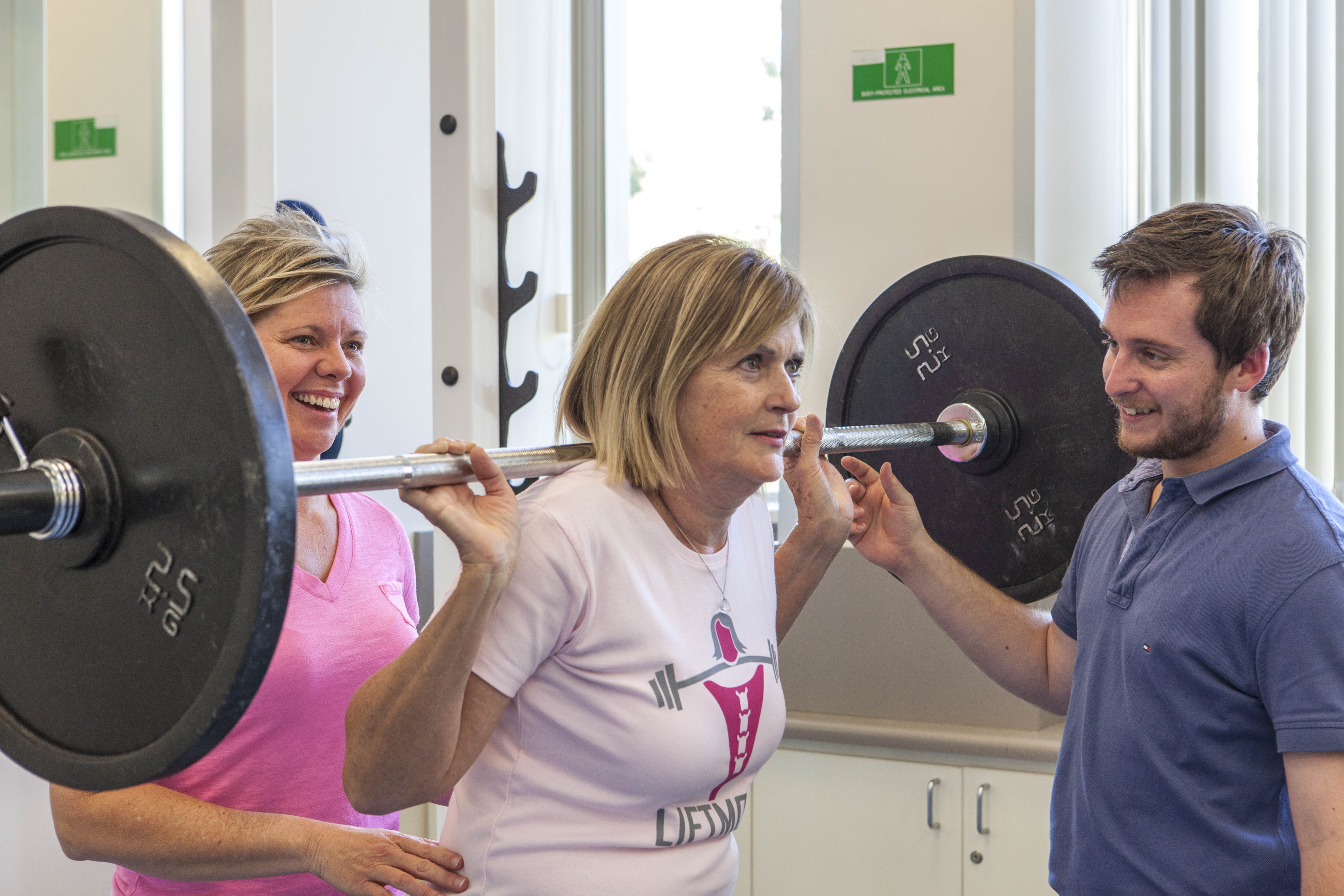
In 2018, researchers published the results of the LIFTMOR trial — one of the most influential studies on exercise and bone density to date. The question was straightforward: could high-intensity strength and impact training actually improve bone density in postmenopausal women with low bone mass, or would it just increase the risk of fracture?
The training approach had a name that sounds more intimidating than it is — HiRIT, or high-intensity progressive resistance and impact training. Strip away the acronym and it was built around a handful of foundational movement patterns: a hip-hinge style deadlift, an overhead press, a squat pattern, and some form of jumping or impact loading.
Participants trained twice a week for eight months, with a gradual ramp-up before working into heavier loads.
What actually happened
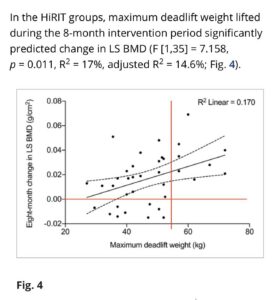
The results were the opposite of what the old advice predicted. Bone mineral density improved at both the lumbar spine and the femoral neck — two of the most common fracture sites. Functional measures improved too: leg strength, back strength, balance, even how quickly people could get up out of a chair.
Compare that to the control group who undertook “safe” exercises at home, who saw no to minimal improvements, the results speak for themselves.
And the part that mattered most for changing minds in the medical world: almost nobody got hurt. Across eight months of heavy lifting and jumping with a group of women who’d been told for years to avoid exactly that, there was only one reported injury — a bout of mild low back pain that resolved with a short break.
Loading bone, under the right conditions, made bone stronger. It actively reversed osteoporosis. Avoiding load didn’t protect it. It just let it keep declining.
Why this matters for how you train
If you’re over 40 and have ever been told to “take it easy” because of your osteoporosis, this research is worth sitting with. Your bones won’t respond to gentle. It responds to a real stimulus — properly loaded, properly progressed, properly coached strength training.
That’s the whole premise behind small group strength training done well. It’s not about maximal lifting on day one. It’s not about recklessly jumping up and down off boxes. It’s about having a program that builds you up through a hip hinge, a squat, a press, and some form of impact, with the load increasing as your body proves it’s ready for more.
This is exactly why we coach the way we do. Every session is about meeting you where you’re at and building from there — not wrapping you in bubble wrap, and not throwing you in the deep end either.
A few important caveats
This isn’t a green light to go max out on deadlifts tomorrow. The LIFTMOR protocol was supervised, progressive, and individualised. Which is why we do things the way we do. You’ll always meet with a coach before you do any form of exercise, and we’ll always start with an assessment of what your starting point is. From there you’ve got an experienced trainer with you in every single workout. If you’ve been diagnosed with osteoporosis or osteopenia, it’s not a death sentence, and it’s not a reason to avoid exercise. If anything it’s the trigger that tells you that you need to start getting stronger.
The biggest takeaway: strength training isn’t something to fear as you get older. For your bones, it might be exactly what they need.
— Max